Craftsmanship & Quality • 5 min read • By Brandon (Pretoria Workshop)
Solid Hardwood vs. Veneer & Engineered Wood: How to Tell Before You Buy
Many 'solid oak look' TV units and dining tables hide MDF cores beneath a 0.6mm veneer skin. Here are 4 simple workshop checks to verify genuine solid hardwood before you invest.
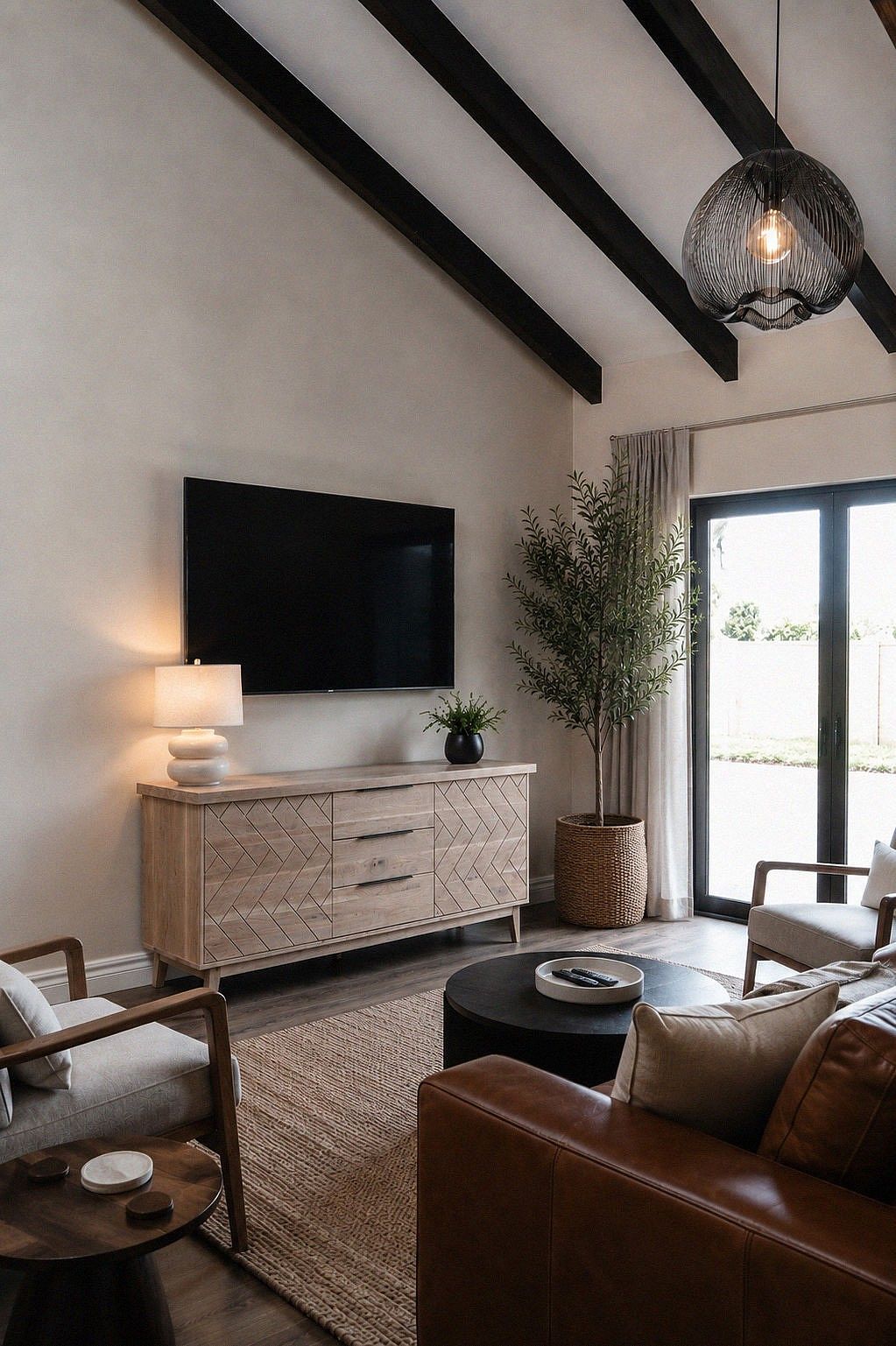
4 Quick Ways to Spot True Solid Hardwood vs. Veneer
- Inspect the End Grain: On genuine solid wood, the top grain curves continuously over the edge and terminates in porous end-grain fibers. Veneered boards have a flat edge-band tape glued across the end with grain running sideways.
- Check Underneath the Tabletop: Manufacturers rarely hide real hardwood underneath. Flip or peek under the slab — solid timber shows full plank glue lines matching the top; veneered pieces reveal raw MDF, particleboard, or cheap backing laminate.
- Feel the Weight & Acoustic Knock: Kiln-dried 45mm French White Oak is heavy and sounds dense and resonant when knocked; hollow honeycomb or MDF boards sound dull.
- Look for Natural Character Variation: No two solid wood boards share an identical repeating knot pattern. Identical repeating grain mirrors across doors signal printed laminate or book-matched commercial veneer.
Why Solid Hardwood Pays Off Over 20+ Years
A chipped corner or swollen water blister on an MDF-core veneer console cannot be sanded out without burning straight through the paper-thin timber skin — turning a R 25,000 purchase into landfill within 5 years. A solid 45mm French White Oak console or dining table can be lightly refreshed, refinished, or passed down to the next generation.
Quick Answers
Our tables, floating shelves, cabinets, frames, and solid fronts are crafted from genuine solid kiln-dried hardwoods (French White Oak, American Walnut, African Iroko) with Baltic birch structural bases where engineered stability is required.
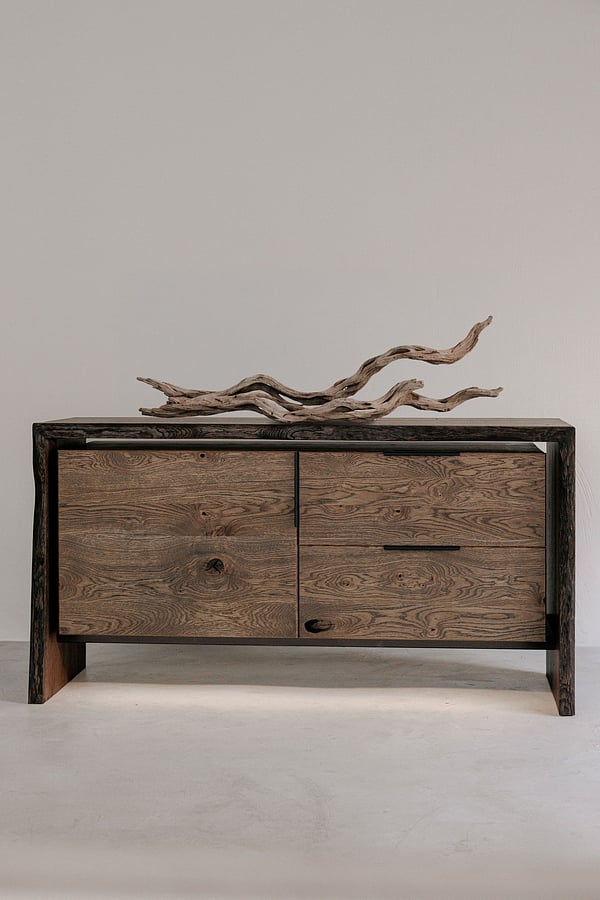
Featured Pieces Mentioned
Full Catalogue →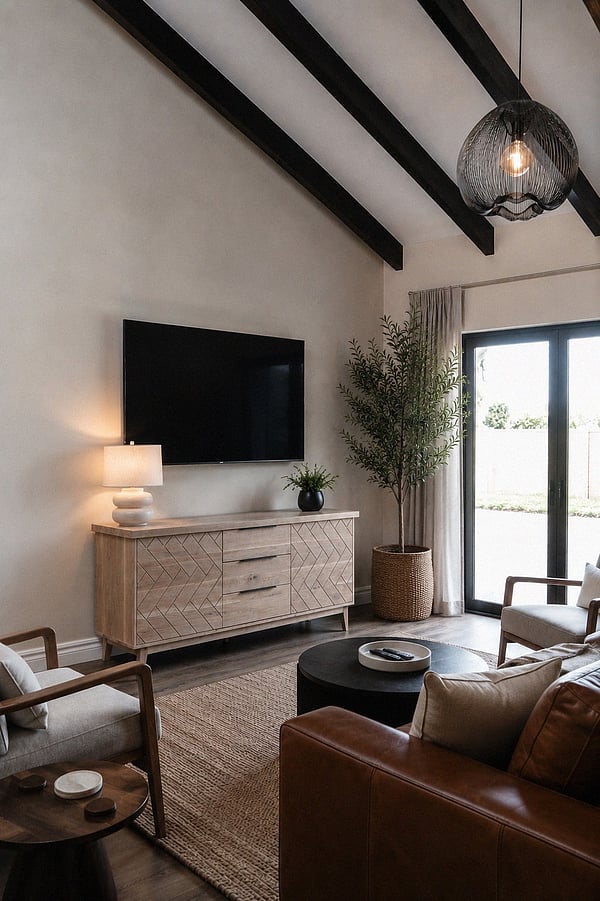
Ready to Discuss Your Custom Solid Wood Piece?
Send Brandon your room dimensions or inspiration photos for an honest timber recommendation and ZAR quote.